

What is Refettorio?
Refettorio Geneva is more than a restaurant—it's a community-driven space that merges the art of gastronomy with humanitarian aid, embodying Geneva’s rich legacy of innovation, creativity, and social equity. Here, we create a unique and dignified dining experience for those most vulnerable in our society, including individuals facing homelessness, isolation, and food insecurity.
Supported by collaborations across community organizations, private donors, public initiatives, and civil society, Refettorio Geneva serves essential meals with a spirit of radical hospitality. Every dish is prepared with care and respect, providing more than just sustenance—it offers comfort, connection, and a reminder of the dignity every individual deserves.
Guided by a zero-waste philosophy, we’re committed to minimizing our environmental footprint. By transforming surplus food that would otherwise go to waste, we protect the environment, conserve resources, and embrace a call to action against food waste. Through this approach, Refettorio Geneva nourishes both body and soul, affirming our belief in the power of food to inspire compassion, restore hope, and build a more inclusive community. Join us in this mission to serve, uplift, and make a tangible difference for those who need it most.


%20(1)%20(1)-min.jpg)
Food Assistance and Social Inclusion
Mater develops and operates food assistance programs that respond to food insecurity while preserving dignity, quality, and social inclusion. Through its operational projects, Mater addresses both emergency contexts and structural vulnerabilities, combining immediate food support with long-term food system transformation. All programs are designed around a core principle: food assistance must uphold the right to food and cannot be reduced to charity or surplus redistribution alone.
Rapid Relief Kitchen (RRK)
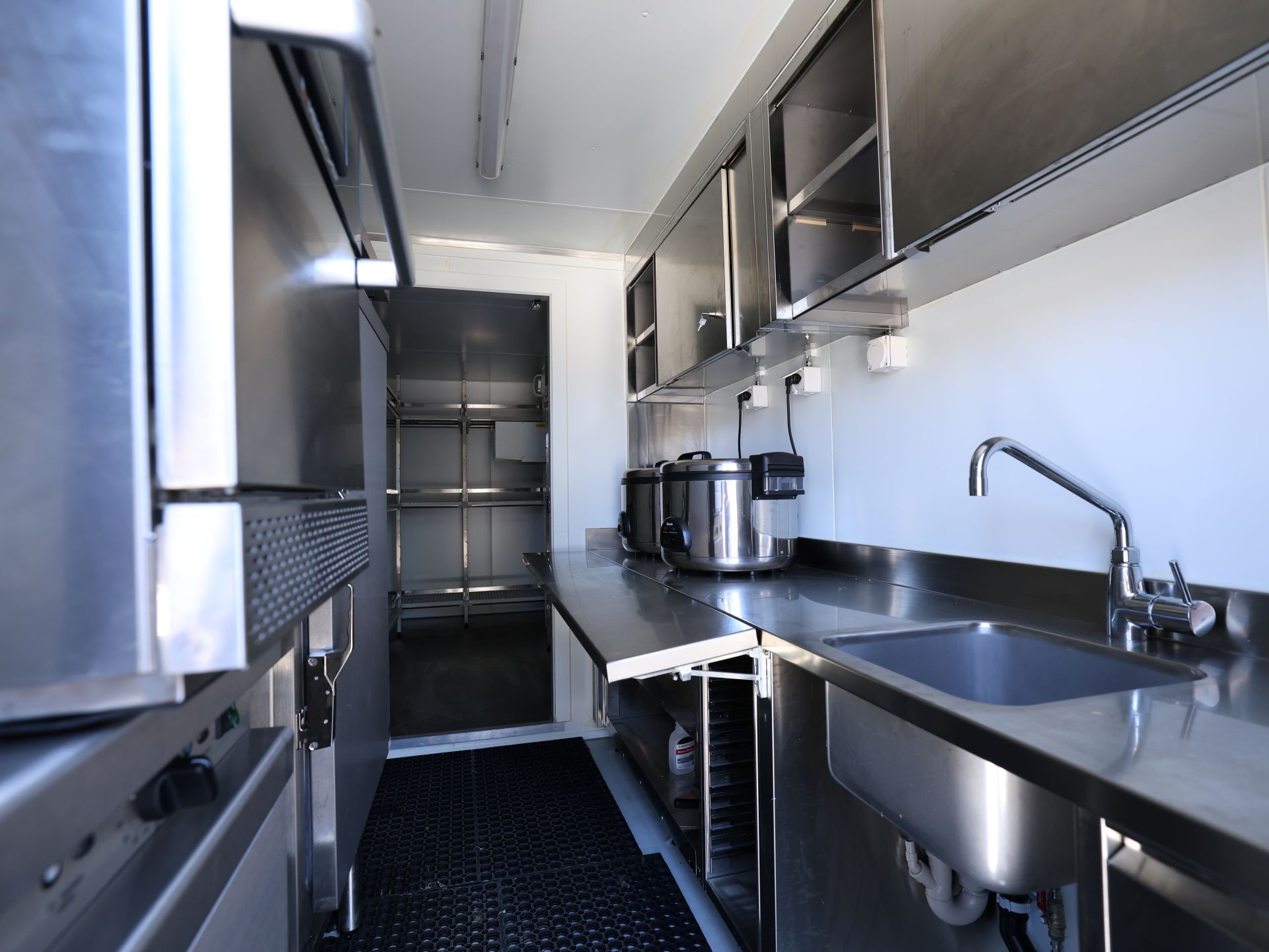
Originally developed to address the urgent food needs aboard the Ocean Viking rescue ship operated by SOS Méditerranée, the Rapid Relief Kitchen has quickly evolved into a vital tool for humanitarian response. The RRK is Mater's mobile food assistance system designed for crisis and emergency contexts. Rather than simply producing meals on site, it regenerates existing food aid chains by improving nutritional quality, logistics, and operational efficiency—a tool that strengthens local capacity rather than replacing it.
Built through the collaborative effort of dedicated donors and humanitarian organisations, the RRK is a portable, containerised kitchen module ready to provide fast, high-quality nourishment in regions where resources are limited and cooking facilities are scarce. Its versatile design has garnered strong interest from the UN High Commissioner for Refugees (UNHCR) and other global partners, positioning it for deployment in challenging settings including refugee camps and high-demand crisis zones.
Following its initial development, the RRK is now fully operational in Lebanon. In Beirut, the system has supported sustained food assistance operations for over 170 days, contributing to the delivery of more than 42,000 balanced meals in an urban crisis environment marked by economic collapse and widespread food insecurity. In parallel, Mater expanded RRK-supported operations into the Bekaa Valley, one of the regions most affected by displacement and chronic vulnerability. Through partnerships with local organisations, the RRK contributed to large-scale zero-waste food transformation initiatives, supporting the distribution of approximately 490,000 meals to displaced families and vulnerable communities. These deployments confirmed the RRK's adaptability across different contexts and its capacity to bridge emergency response with longer-term food system resilience.
At the heart of the RRK's mission is a commitment to swiftly deliver balanced, dignifying meals to individuals who have faced unimaginable hardship. By merging cutting-edge technology with culinary expertise, we bring the power of food to those who need it most—delivering not just sustenance but a sense of comfort and hope. Your support is crucial to expanding this initiative and bringing vital food support to more individuals and families in crisis. Join us on this journey to make a real difference in the lives of refugees and displaced persons, fostering compassion and resilience across the globe.

The Ark
Our overarching mission is to preserve Schindler's Ark and transform it into a Museum of Survivors, nestled in theheart of Europe. Schindler's Ark, a poignant symbol of resilience, served as a sanctuary for 1200 Jews on Schindler's List, immortalized in Steven Spielberg's film. Unfortunately, this historical site was tragically stolen by the Nazis from the Low-Beer family in 1938.
In 2019, the Low-Beer family, in collaboration with the local community, undertook the monumental task of restoring the dilapidated textile factory, giving rise to the Arks Foundation. Our collective vision is to create the Museum of Survivors, a testament to human endurance and the indomitable spirit of those who found refuge within its walls.
What makes this endeavor truly special is our collaboration with school students from five countries, co-designing the museum that is set to open its doors in 2025—with your invaluable support. The architectural brilliance behind the museum is crafted by young architects hailing from 110 countries, a testament to the global resonance of our cause. This collaboration is made possible through the prestigious Inspireli award, established by Vaclav Havel.
Together, let's weave the tapestry of history, resilience, and education. Join us in preserving the legacy of Schindler's Arkand bringing to life the Museum of Survivors—a beacon of remembrance and inspiration for generations to come.

Geneva Right to Food Manifesto
In the canton of Geneva, a myriad of dedicated actors have been actively addressing critical issues surrounding food security and sovereignty, championing the fundamental right to food. Despite its acknowledgment in the Universal Declaration of Human Rights (1948) and the International Covenant on Economic, Social and Cultural Rights (1966), ratified by Switzerland, the right to food had yet to find its place in the canton's constitution.
The onset of the COVID-19 pandemic exposed thousands in the canton of Geneva to the harsh realities of food insecurity. Responding to this pressing need, the Grand Council (cantonal parliament) adopted a parliamentary initiative during this challenging period to enshrine the right to food in the constitution. In June 2023, the people of Geneva had the opportunity to vote on this significant inclusion.
While there is currently no specific initiative on food sovereignty, a pivotal moment in 2018 revealed the canton's stance. Despite the Swiss population voting against including food sovereignty in the federal constitution, Geneva's residents overwhelmingly voted in favor, indicating a favorable environment for such inclusion at the cantonal level.
In this context, a forum was convened to bring together stakeholders who have tirelessly worked on these crucial matters in the canton. The goal was to facilitate a constructive dialogue on the historical political implications of incorporating the right to food and food sovereignty into the constitution of Geneva. Through democratic collaboration, our objective was to formulate a political proposal and initiate a campaign rallying support for the inclusion of the right to food and food sovereignty in the canton's constitution.
On 18 June 2023, 67% of voters in the canton of Geneva agreed to enshrine the right to food in the Geneva Constitution. This example has inspired initiatives in the canton of Vaud, at federal level, in France and at the Council of Europe, and was presented to the Committee on World Food Security in Rome. To make the right to food a reality, a framework law will have to be passed, and a number of measures have already been taken at municipal level. Dr Christophe Golay, Senior Research Fellow at the Geneva Academy, makes recommendations to ensure that the canton and municipalities of Geneva respect, protect and fulfil the right to food of everyone in Geneva, and promote a just transition towards sustainable food systems.


.jpg)
